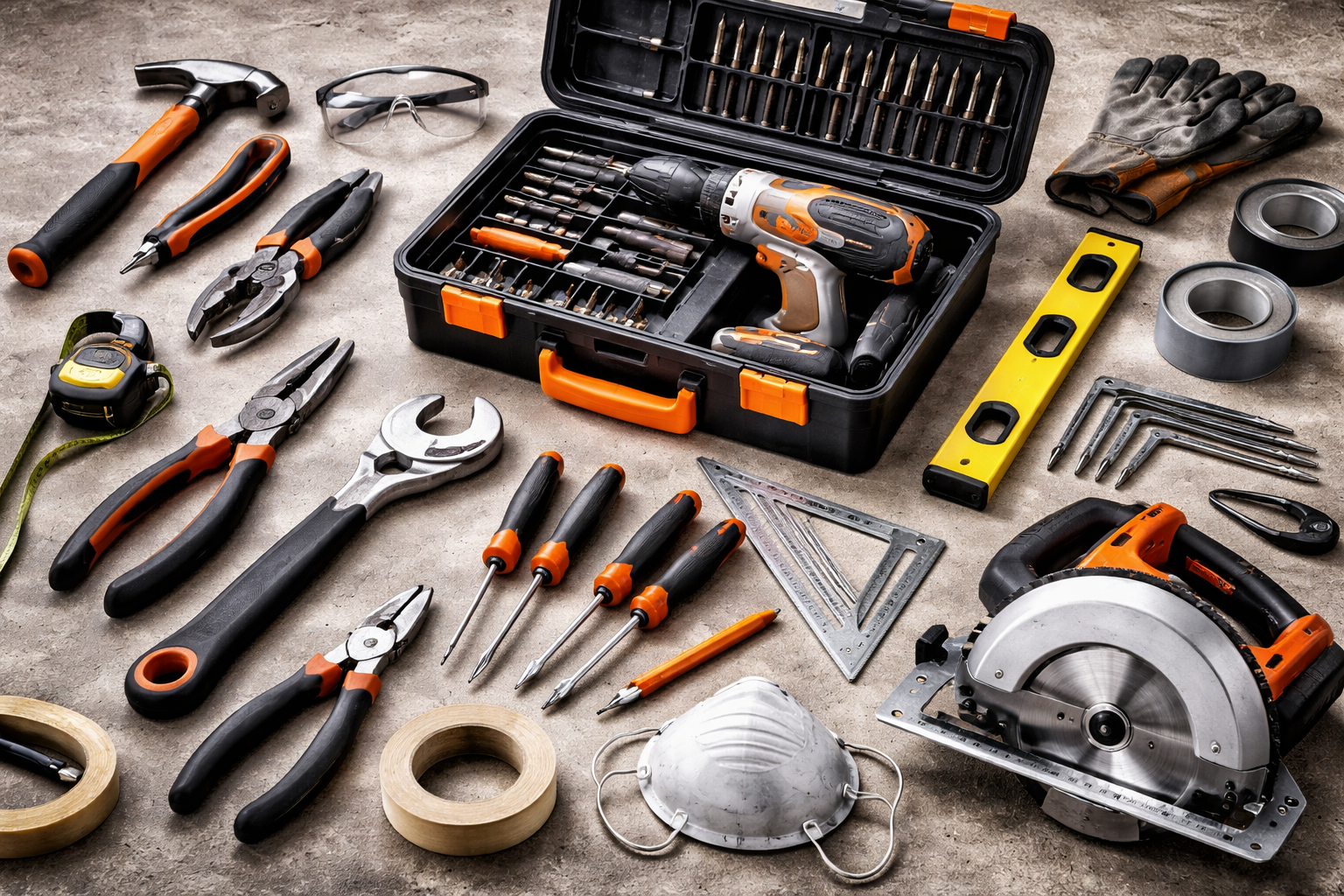
Starting a DIY journey can feel exciting and overwhelming at the same time. Many beginners jump into projects without the right tools, only to realize halfway through that preparation matters just as much as creativity.
The truth is simple: having the right tools makes DIY projects faster, safer, and more enjoyable. It also helps prevent costly mistakes and frustration.
If you’re just getting started, you don’t need a garage full of equipment. Instead, focus on building a smart, practical toolkit that covers essential tasks.
Let’s break down the must-have tools every first-time DIYer should own.
Why Tools Matter More Than You Think
Before diving into the list, it’s important to understand why tools matter so much.
The right tool:
- Improves accuracy
- Saves time
- Reduces physical effort
- Increases safety
- Enhances project quality
Using the wrong tool—or no tool at all—often leads to uneven cuts, weak installations, and unnecessary repairs.
For beginners, the goal is efficiency and reliability.
The Essential Hand Tools
Every DIY toolkit starts with a solid set of hand tools. These tools handle the majority of everyday projects.
1. Hammer
A hammer is one of the most basic and versatile tools.
You’ll use it for:
- Driving nails
- Removing nails
- Light demolition work
A claw hammer is the best choice for beginners because it offers both functionality and ease of use.
2. Screwdriver Set
A quality screwdriver set is essential for assembling furniture, tightening fixtures, and handling small repairs.
Look for:
- Flathead screwdrivers
- Phillips head screwdrivers
- Comfortable grips
Magnetic tips are especially helpful for holding screws in place.
3. Tape Measure
Precision is critical in DIY work. A tape measure ensures accurate measurements for cutting, spacing, and installation.
Choose a tape measure that:
- Extends at least 25 feet
- Has clear markings
- Locks securely
Even small measurement errors can lead to big problems.
4. Utility Knife
A utility knife is perfect for cutting materials like:
- Cardboard
- Drywall
- Plastic
- Carpet
It’s a simple tool, but incredibly useful for detailed work.
5. Pliers
Pliers provide grip and control when handling wires, small objects, or stubborn fasteners.
Common types include:
- Needle-nose pliers
- Slip-joint pliers
- Locking pliers
They’re especially helpful for electrical work and tight spaces.
Power Tools That Save Time
While hand tools are essential, power tools make projects faster and more efficient.
6. Cordless Drill
A cordless drill is one of the most valuable tools you can own.
It allows you to:
- Drill holes
- Drive screws
- Assemble furniture quickly
Look for a drill with adjustable speed settings and a rechargeable battery.
This tool alone can dramatically reduce project time.
7. Circular Saw
A circular saw is ideal for cutting wood and other materials.
It provides:
- Straight cuts
- Faster cutting speed
- More precision than manual saws
Beginners should start with basic projects to build confidence before tackling complex cuts.
8. Level
A level ensures that surfaces are straight and aligned.
Use it for:
- Hanging shelves
- Installing cabinets
- Mounting TVs
Even small misalignments can ruin the look of a project.
A simple bubble level works well for beginners.
Safety Tools You Should Never Skip
Safety should always come first in DIY work.
9. Safety Glasses
Protect your eyes from:
- Dust
- Debris
- Flying particles
Even small particles can cause serious injury.
10. Work Gloves
Gloves protect your hands from cuts, splinters, and abrasions.
They also improve grip when handling tools and materials.
11. Dust Mask or Respirator
Cutting, sanding, or drilling can release harmful particles into the air.
A dust mask helps protect your lungs during these activities.
Measuring and Marking Tools
Accurate measurements are the foundation of successful DIY projects.
12. Speed Square
A speed square helps create straight lines and precise angles.
It’s especially useful for:
- Woodworking
- Framing
- Marking cuts
13. Carpenter’s Pencil
Unlike regular pencils, carpenter’s pencils don’t roll away and can mark rough surfaces easily.
They are designed for durability and visibility.
Fastening and Assembly Tools
These tools help secure materials together.
14. Adjustable Wrench
An adjustable wrench is perfect for tightening or loosening nuts and bolts.
It replaces the need for multiple wrench sizes.
15. Allen Key Set
Many furniture pieces and fixtures use hex screws.
An Allen key set ensures you’re prepared for these situations.
Storage and Organization
Keeping tools organized is just as important as owning them.
16. Toolbox or Tool Bag
A toolbox keeps everything in one place.
It helps:
- Prevent lost tools
- Improve efficiency
- Protect equipment
A portable tool bag is a great option for beginners.
Optional but Helpful Tools
As you gain experience, consider adding these tools to your collection.
- Stud finder
- Laser level
- Jigsaw
- Power sander
- Socket set
These tools expand your capabilities and allow you to take on more advanced projects.
Quality vs. Budget: What Should You Choose?
Beginners often wonder whether to invest in expensive tools.
The answer depends on usage.
For frequent use:
- Invest in higher-quality tools
- Look for durability and comfort
For occasional use:
- Mid-range tools offer good value
- Avoid extremely cheap options
Poor-quality tools can break easily and compromise safety.
Reliable tools provide better results and last longer.
Common Mistakes First-Time DIYers Make
Even with the right tools, beginners can make mistakes.
Avoid these common issues:
- Skipping measurements
- Using the wrong tool
- Ignoring safety precautions
- Rushing through projects
- Buying unnecessary tools
Building skills gradually is more effective than rushing into complex projects.
Building Skills Alongside Tools
Tools are only part of the equation.
Successful DIYers focus on:
- Learning techniques
- Practicing consistently
- Starting with simple projects
- Improving over time
As skills improve, your tool collection will naturally grow.
If you want to maximize the value of your DIY efforts, explore What DIY skills save the most money long term? to discover which skills provide the biggest financial return.
How Tools Save Money Over Time
Investing in the right tools can save money in several ways:
- Reducing the need for professional services
- Preventing costly mistakes
- Extending the life of home fixtures
- Enabling quick repairs
DIY projects become more cost-effective as your skills and tool collection grow.
When to Upgrade Your Tools
As you gain experience, you may notice limitations in your current tools.
Upgrade when:
- Tools wear out
- Projects become more complex
- Precision becomes more important
- Efficiency matters more
Upgrading strategically ensures that your toolkit evolves with your skills.
Final Thoughts
So, what tools should every first-time DIYer own?
Start with the basics: hand tools, a cordless drill, measuring tools, and safety equipment. These essentials cover most beginner projects and provide a strong foundation for growth.
As your confidence increases, you can expand your toolkit and take on more advanced projects.
DIY is not about having every tool—it’s about having the right tools and knowing how to use them.
With the right setup, you can turn ideas into reality, save money, and build valuable skills that last a lifetime.