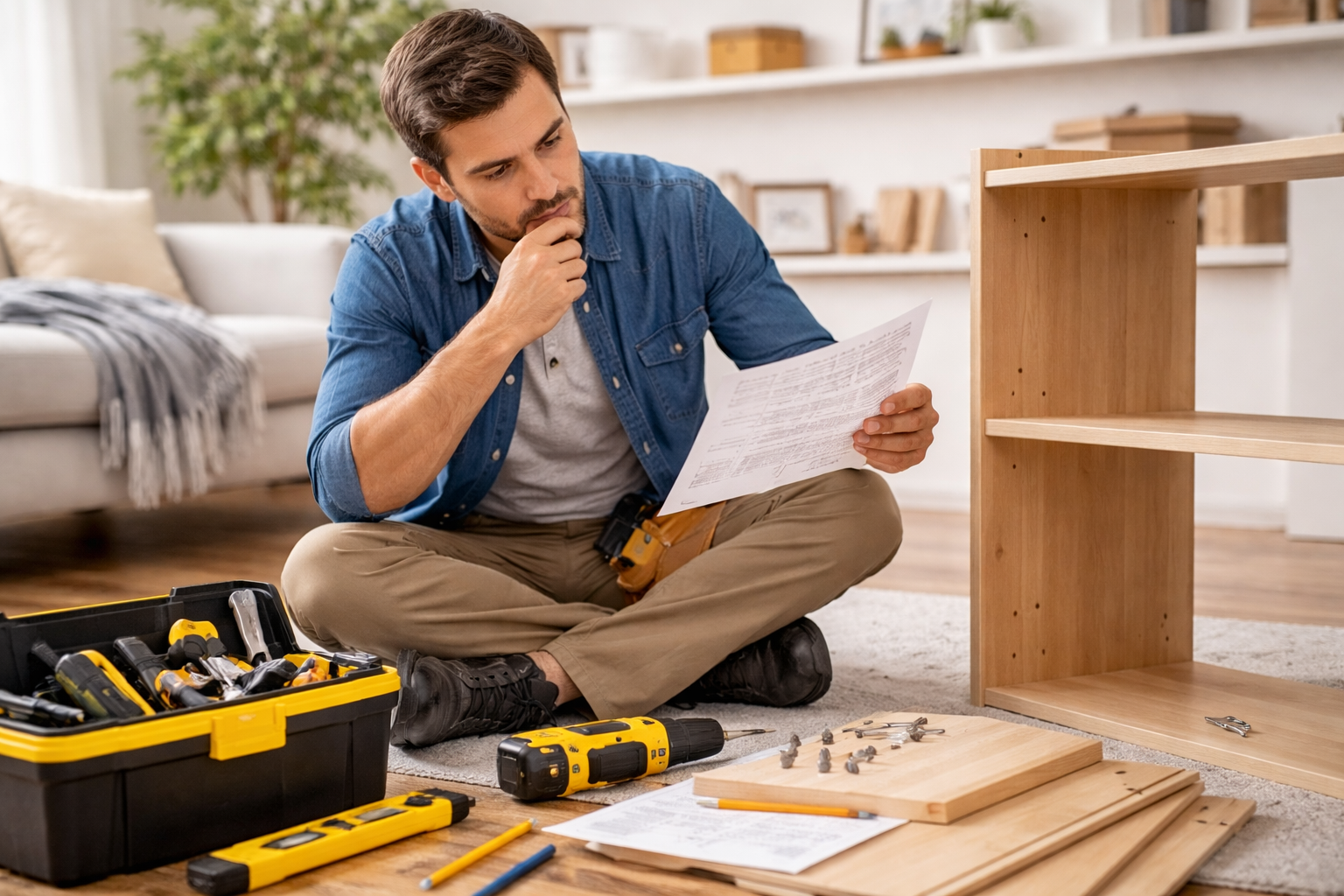
DIY is often seen as a practical way to improve your home or save money. However, one of its most powerful benefits goes far beyond tools and materials. DIY projects actively strengthen your ability to think critically, adapt quickly, and solve problems effectively.
So how can DIY help develop problem-solving skills?
DIY forces you to face real-world challenges, analyze situations, test solutions, and learn from mistakes. Every project becomes a hands-on exercise in decision-making, creativity, and logical thinking.
In this in-depth guide, you’ll discover how DIY builds strong problem-solving skills, why it works so effectively, and how to apply these skills beyond home improvement.
Why Problem-Solving Skills Matter in Everyday Life
Problem-solving is one of the most valuable life skills. It impacts:
- Career success
- Financial decisions
- Home management
- Personal growth
- Stress management
Strong problem-solving skills allow you to approach challenges with confidence rather than frustration.
DIY projects naturally develop these abilities because they involve real, tangible problems that require immediate solutions.
DIY as Real-World Problem Training
Unlike theoretical learning, DIY places you in situations where outcomes matter.
For example:
- A shelf must be level
- A pipe must not leak
- A cabinet must align properly
These tasks require you to think, adjust, and act with precision.
DIY provides immediate feedback. If something doesn’t work, you see it instantly—and must fix it.
This hands-on learning accelerates problem-solving development.
1. Identifying Problems Accurately
The first step in problem-solving is recognizing what’s wrong.
DIY trains you to observe details carefully.
For example:
- Why is this door not closing properly?
- Why does this paint look uneven?
- Why is this shelf tilting?
You begin to analyze root causes rather than guessing.
This skill transfers to everyday life, where identifying the real issue is often the hardest part.
2. Breaking Problems into Smaller Steps
Large DIY projects can feel overwhelming. However, successful DIYers break tasks into manageable steps.
For example, installing flooring involves:
- Measuring the space
- Preparing the surface
- Cutting materials
- Laying planks
- Finishing edges
This structured approach builds logical thinking.
Breaking problems into smaller parts makes them easier to solve and reduces stress.
3. Learning Through Trial and Error
DIY teaches that mistakes are part of progress.
When something goes wrong, you:
- Analyze the mistake
- Adjust your method
- Try again
This iterative process strengthens resilience and adaptability.
Over time, you become less afraid of failure and more focused on solutions.
4. Developing Creative Solutions
Not every DIY challenge has a straightforward answer.
Sometimes materials don’t fit, tools aren’t available, or conditions change unexpectedly.
DIY encourages creative thinking:
- Using alternative materials
- Modifying designs
- Adapting techniques
Creative problem-solving is a valuable skill in both personal and professional settings.
5. Improving Decision-Making Skills
DIY projects require constant decisions:
- Which materials should you use?
- Which tools are best?
- What design works best for the space?
- Should you fix or replace something?
Each decision has consequences.
As you gain experience, you learn to make faster, more confident decisions based on logic and experience.
6. Enhancing Patience and Focus
Problem-solving requires patience.
DIY teaches you to slow down, think carefully, and avoid rushing.
Rushing often leads to mistakes. Fixing those mistakes takes more time than doing it right the first time.
Patience improves accuracy, which leads to better outcomes.
7. Understanding Cause and Effect
DIY projects provide clear cause-and-effect relationships.
For example:
- Incorrect measurements lead to poor fit
- Poor preparation leads to uneven finishes
- Weak support leads to instability
Understanding these connections strengthens analytical thinking.
You begin to anticipate outcomes before they happen.
8. Building Confidence Through Success
Every completed project reinforces your ability to solve problems.
That “I fixed it” or “I built that” feeling is powerful.
Confidence encourages you to take on bigger challenges.
As your skills grow, so does your willingness to tackle complex problems.
9. Applying Problem-Solving Skills Beyond DIY
The skills developed through DIY extend far beyond home improvement.
They apply to:
- Workplace challenges
- Financial decisions
- Personal relationships
- Time management
For example, learning to diagnose a plumbing issue can translate into diagnosing workflow inefficiencies at work.
Problem-solving becomes a mindset, not just a skill.
10. Managing Unexpected Challenges
DIY projects rarely go exactly as planned.
Unexpected issues may include:
- Hidden damage
- Incorrect measurements
- Missing materials
- Tool malfunctions
These situations require quick thinking and adaptability.
Learning to handle unexpected challenges builds mental flexibility.
11. Developing Research Skills
DIY projects often require research.
You may need to:
- Watch tutorials
- Read guides
- Compare materials
- Understand techniques
Research helps you make informed decisions.
It also improves your ability to gather and evaluate information—an essential problem-solving skill.
12. Learning When to Ask for Help
Strong problem-solving isn’t about doing everything alone.
DIY teaches you when to:
- Seek advice
- Consult professionals
- Use online resources
Knowing when to ask for help prevents costly mistakes.
This balance is crucial for effective problem-solving.
13. Understanding Rules and Limitations
Some DIY projects involve regulations and safety standards.
For example, structural changes or electrical work may require permits.
Understanding these requirements is part of responsible problem-solving.
If you’re unsure about legal or safety considerations, reading How do you know when a DIY project requires a permit? can help you make informed decisions before starting your project.
Working within rules ensures safety and long-term success.
14. Building Long-Term Thinking
DIY encourages long-term thinking.
You learn to consider:
- Durability
- Maintenance
- Cost over time
- Future upgrades
Instead of quick fixes, you begin to focus on sustainable solutions.
This mindset leads to better decision-making in all areas of life.
15. Developing Resourcefulness
DIY teaches you to work with what you have.
You may not always have the perfect tool or material.
Instead, you learn to:
- Adapt resources
- Repurpose materials
- Maximize efficiency
Resourcefulness is a key component of problem-solving.
16. Reducing Dependence on Others
As your DIY skills improve, you rely less on external help.
You gain independence and control over your environment.
This independence builds confidence and reduces stress when problems arise.
17. Turning Problems Into Opportunities
DIY changes how you view problems.
Instead of seeing obstacles, you begin to see opportunities for improvement.
For example:
- A broken cabinet becomes a chance to upgrade
- A damaged wall becomes an opportunity to redesign
- A cluttered space becomes a chance to organize
This positive mindset transforms challenges into growth.
How to Use DIY to Strengthen Problem-Solving Skills
If you want to maximize the benefits of DIY, follow these strategies:
Start Small
Begin with simple projects that allow you to build confidence.
Reflect on Mistakes
After each project, ask:
- What went wrong?
- What worked well?
- What would I do differently?
Challenge Yourself Gradually
As your skills improve, take on more complex projects.
Stay Curious
Always look for new techniques and ideas.
Final Thoughts
So how can DIY help develop problem-solving skills?
DIY provides real-world challenges that require critical thinking, creativity, patience, and adaptability. Each project strengthens your ability to analyze problems, make decisions, and implement effective solutions.
These skills extend far beyond home improvement. They influence how you approach challenges in every aspect of life.
DIY isn’t just about building or fixing—it’s about thinking smarter, adapting faster, and growing stronger with every project.
With each task you complete, you’re not just improving your home—you’re improving your mindset.